PhD candidate Mark Salazar recently published a new paper in Chemistry Research in Toxicology that presents a novel approach to quantify metals and aerosols in a liquid impinger, which offering a new approach for future e-cigarette aerosol studies.
Congratulations to undergraduate researchers Emily and Zap for completing their BS degrees! Both Emily and Zap conducted independent research and drafting first-authored papers that will be submitted in summer and/or fall. Emily will be starting a PhD program in the fall under the guidance of Ben Peterson (UW - Milwaukee)!
I'm pleased to share a new paper just published in Analytical Chemistry that uses an advanced method of X-ray absorption spectroscopy (HERFD-XANES) of sulfur to probe reduced sulfur speciation in complex environmental mixtures. We document how thiol deprotonation can be exploited to resolve thiols from thioethers and determine thiol pKa, using quantifiable changes in the spectra with pH manipulation. LINK to paper.
In this paper, we discuss the "black box" model of microbial activity in the environment with regards to the biogeochemistry of trace elements. We highlight the limitations of this conceptual model, with a focus on the different variables and processes that can impact microbial activity in the environment. We then highlight microbial transformations of arsenic and mercury as an example of how these processes can influence contaminant biogeochemistry.
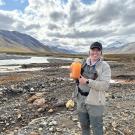
We're excited to have Dr. Abagael Pruitt join our team for a Scientist in the Park Fellowship supported by the National Park Foundation. Abagael will be researching the processes unfolding in Arctic rivers due metal mobilization.